Description:
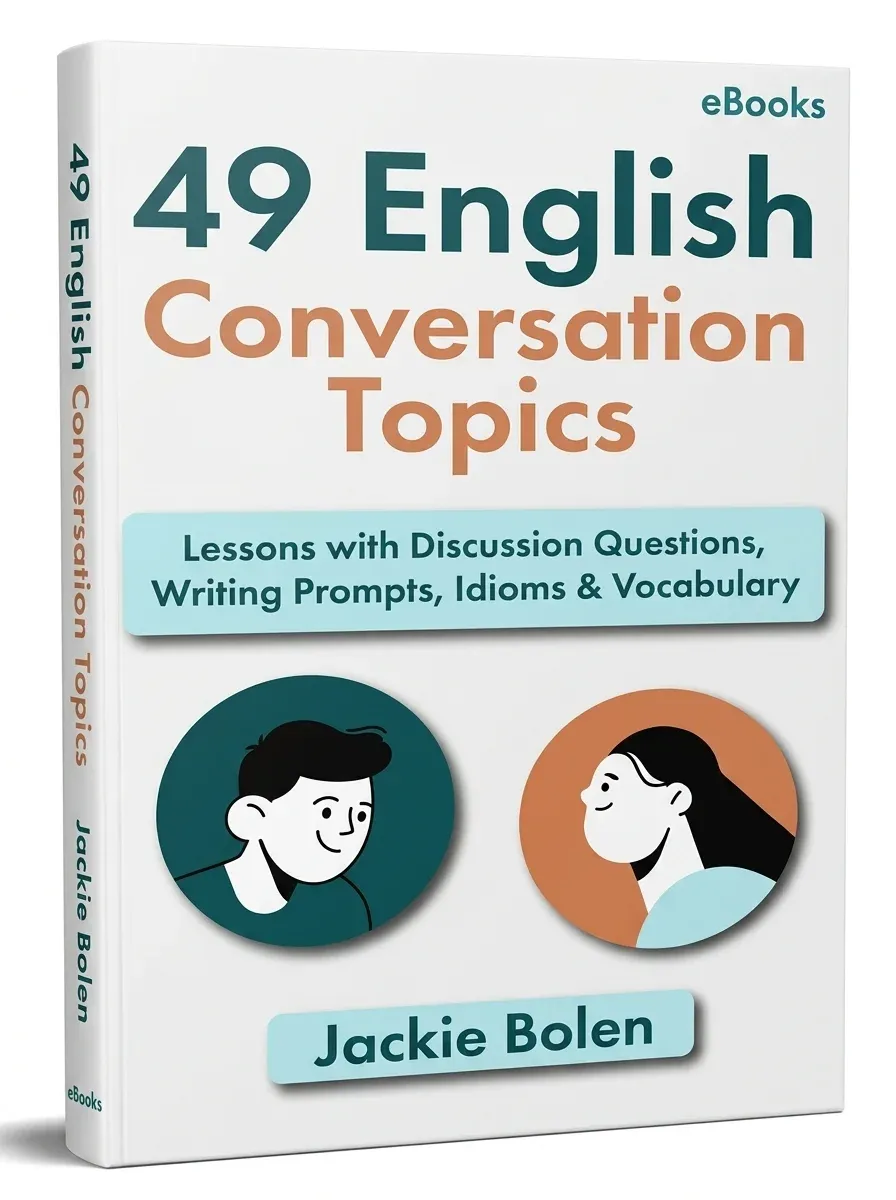
Mastering English requires structured practice. The resource 49 English Conversation Topics Lessons with Discussion Questions, Writing Prompts, Idioms Vocabulary offers a complete system for learners and teachers. It bridges speaking, writing, and cultural fluency through real-world themes. Below, we explore five core advantages of this integrated approach.
Structured Lessons for Real Fluency
Each of the 49 English Conversation Topics Lessons with Discussion Questions, Writing Prompts, Idioms Vocabulary is designed as a standalone unit. Learners move from guided questions to independent expression. Unlike random speaking practice, these lessons build coherence—starting with vocabulary activation, moving to debate-style questions, and ending with written reflection. This structure reduces anxiety and boosts retention, making it ideal for classrooms or self-study.
Discussion Questions That Spark Critical Thinking
The discussion questions avoid simple yes/no answers. Instead, they challenge learners to compare cultural norms, express opinions, and negotiate meaning. For example, a topic like “remote work” includes prompts on productivity, ethics, and work-life balance. These questions mirror real conversations, preparing students for academic interviews, job meetings, and social interactions. Teachers save hours of prep time while ensuring every learner speaks meaningfully.
Writing Prompts to Solidify Grammar and Style
Writing reinforces speaking. The writing prompts in 49 English Conversation Topics Lessons with Discussion Questions, Writing Prompts, Idioms Vocabulary ask learners to apply discussion insights into paragraphs, emails, or short essays. This transition from spoken to written English cements sentence structure, punctuation, and tone. Prompts are scaffolded—beginner to advanced—allowing differentiated instruction without extra planning.
Idioms Vocabulary for Natural Expression
Idioms and collocations are the secret to sounding native. Each lesson introduces 5–7 targeted idioms tied to the topic (e.g., “think outside the box” for innovation). Learners practice them in discussion and writing, moving from passive recognition to active use. This vocabulary layer ensures students don’t just speak correctly but naturally, avoiding robotic textbook English.
Integrated Practice for Long-Term Retention
The power of 49 English Conversation Topics Lessons with Discussion Questions, Writing Prompts, Idioms Vocabulary lies in synergy. Discussing, then writing, then reviewing idioms creates multiple memory pathways. Teachers can assign one topic per week for a full academic year. Learners report higher confidence in real situations—from phone calls to presentations—because they’ve rehearsed language in varied, realistic contexts.